Write a comment
Mammoplasty is a plastic surgery of breast augmentation and transformation. The purpose of this surgery is to both make the breast larger and to achieve a natural look and beautiful shape for you to feel yourself at comfort and ease and which will be proportional to your body while making it more attractive.
Indications for Breast Augmentation
Augmentation mammoplasty is indicated for:
- Age-related changes in breast shape
- Breast asymmetry or differences in breast volume
- Loss of breast shape after pregnancy and lactation
- Naturally small breast size (hypoplasia)
- Post-mastectomy (removal of the breast) reconstruction
Breast Augmentation with Implants
The most effective and safe way to increase breast size is through the placement of silicone implants.
Breast augmentation with implants is a plastic surgery procedure aimed at altering the size and shape of the breasts by placing silicone endoprostheses either under or above the pectoral muscle.
Numerous clinical studies and trials have confirmed the reliability of modern breast implants and demonstrated their ability to withstand a high level of stress. The filler material of the implants, cohesive gel, possesses a memory effect, allowing them to return to their original shape. For added safety, the implant shell contains a special barrier layer that prevents the penetration of low-molecular-weight silicone components into the body.
In cases of breast ptosis (sagging), it is recommended to combine breast augmentation with a breast lift. For minor corrections of breast defects and asymmetry, the lipofilling method is ideal.
Is it possible to enlarge breasts with the Patient’s Own Fat?
Before & After Photos
-
Motiva shortened implants were installed; eared drop. Implant size 285 ml
-
Breast augmentation with anatomical implants Allergan 295 ml
-
Breast augmentation with implants Polytech polyurethane 315 ml, under the muscle
-
425 ml Polytech polyurethane anatomical drop-shaped. Under the muscle, 6 months post-op
-
Polyurethane anatomical implants Polytech 425 ml
-
350 ml Polytech Polyurethane Anatomical implants, under the muscle. 2 months post-op


Preparing for Surgery
Before undergoing breast augmentation, a patient is required to undergo several tests and diagnostic procedures.
During the preparation for the surgery, you should:
- Refrain from taking medications that affect blood clotting.
- It is recommended to abstain from smoking and alcohol for at least two weeks before the operation.
- If you intend to lose or gain weight, it is better to make these adjustments before breast augmentation, as rapid weight fluctuations can have a negative impact on the final result.
During the preoperative consultation with a plastic surgeon, it is essential to provide detailed information about the medications you are taking, your lifestyle, harmful habits, chronic illnesses, and other factors that may affect the outcome of the surgery.
Choice of breast implants
The selection of breast implants depends on various factors, including rib shape, chest structure, available tissues, and body proportions. Choosing the correct size and shape of the implant and predicting how the breasts will look after the swelling subsides and they "settle" can only be accurately done by a plastic surgeon. They consider their own experience, aesthetic judgment, and precise measurements to make this determination.
Risks of breast augmentation surgery. Which implants are the safest?
Any surgical procedure carries risks such as bleeding, swelling, infection, and more. Potential risks associated with breast augmentation using implants include capsular contracture, seroma, implant rupture, and other complications (a list of possible risks of breast augmentation from ASPS). Information about potential complications is provided during the consultation, both verbally and in a detailed information sheet (in accordance with FDA regulations). Patients must have a clear understanding of all the pros and cons of the operation to make an informed decision.
Read more about possible complications after breast augmentation
An experienced surgeon will tell you that you can achieve beautiful breasts with any brand (Motiva, Polytech, Mentor, Eurosilicone, Nagor, etc.). To achieve this, it's essential to choose the right shape (width, height, projection), not just the implant volume. Moreover, even with the same width, height, and projection measurements, different brands may have significantly different volumes.
It's essential to minimize complications while maximizing the longevity of your breast augmentation!
As of today, evidence-based medicine statistically distinguishes two different implant coating options that demonstrate the lowest level of complications:
-
Nanotextured silicone shell 80-100 mm2 Motiva. Motiva provides the least textured surface compared to all other brands (Mentor, Polytech, Eurosilicone, Nagor, etc.). Practice has shown that the human body exhibits the minimum inflammatory response to nano-coating. In other words, it minimally rejects it (it should be acknowledged that any foreign material is more or less rejected by the body). This is confirmed by the formation of the thinnest and most delicate capsule compared to other types of coatings. Learn more about Motiva breast implants with "wings" and nanotexture and the next-generation Motiva Ergonomix 2 implants.
-
Polyurethane shell Polytech (please note that this is one of Polytech's shell options; this manufacturer also offers other types of shells: macrotextured and microtextured, which have different complication percentages). Micro polyurethane implants, like regular ones, are also filled with silicone but have an additional superficial layer of polyurethane. To the touch and in terms of texture, polyurethane is the same as microtextured implants.
Percentage of complications after mammoplasty depending on surface of the implant
When comparing types of implant surfaces, irrespective of the brand, according to global statistics, polyurethane and nanotextured surfaces show the lowest complication rates, making them the safest options. For example:
-
Capsular contracture of grades 3 and 4 (requiring reoperation with implant replacement): For textured implants, it's around 5%, for nanotexture implants, it's less than 1%, and for polyurethane implants, it's approximately 0.4-1%.
-
Late seromas (occurring 6 months after surgery or later): Textured implants have a rate of 5-10%, while nanotextured implants are less than 1%, and polyurethane implants can be up to 5%.
-
Displacement or flipping: Textured implants have a rate of 5-10%, nanotextured implants with additional fixators are at 0%, and polyurethane implants also have a 0% rate*.
-
Rippling: Textured implants are at a rate of 5-10%, while polyurethane implants have a rate of 0.01%.
-
BIA-ALCL (breast implant-associated anaplastic large cell lymphoma): The risk of developing BIA-ALCL is 0.0083%. It can occur with implants of any surface type, but the majority of cases have been observed with implants of rough texture, specifically macrotextured implants (around 60% of all ALCL cases).
*Please note that displacement or flipping is only possible in combination with seroma, when the implant floats in serous fluid.

Places of installation of the implant:
- Under pectoral muscle (in 2 plains) when upper part of the implant is installed under the greater pectoral muscle and the lower one under glandular tissue. The implant is reliably protected by pectoral muscle and tissues of mammal gland itself, palpation and translocation of implants are minimized.
- Under glandular tissue – is only possible upon availability of a sufficient volume of soft tissues and small size of mammal glands. Is applied extremely rarely.
- Under fascia of greater pectoral muscle – this method secures additional fixture of the implant compare to installation under the gland due to development of more expressed connections between breast prosthesis and major pectoral muscle.
Types of surgical access
Breast augmentation is done through incisions located in places referred to as ways of surgical access. In order to make postsurgical scar unnoticeable to anyone, incisions as a rule are done in natural folds of the body. There are three ways of access:
- The most common, convenient and low traumatic way is an inframammary incision. As it comes from its name, incision is made by the surgeon under the mammary gland in a natural fold of the body and it gives the surgeon the best view and access. In such a way, tissue of mammary gland is practically uninjured, post-surgical scar is least noticeable and is not visible to anyone.
- Periareolar (peripapillary) incision is made at the edge of areola. It excellently hides post-surgical scar and provides for good access for the surgeon.
- Another method of access which allows hiding the scar in a reliable way is axillary incision. However, it is applied rarely as big distance between armpit and mammary gland makes it difficult for the surgeon to access the area of intervention.
Surgery Procedure
-
During the surgery, the surgeon makes an incision, separating the subcutaneous tissue and soft tissues, thereby creating a "pocket" for the implant. The size and number of incisions are determined by the surgeon during the surgical procedure.
-
Following this, the surgeon places the implant, sutures the soft tissues, and applies a cosmetic stitch.
- Average duration of the surgery: from 1 to 3 hours, depending on the complexity of the chosen breast augmentation method.
- Anesthesia: general (intravenous with Propofol Lipuro or inhalation with Sevoflurane)
- Length of stay in the clinic: 1 day
Rehabilitation
| Pain, Swelling, and Bruising. Immediately after the surgical procedure, the patient is taken to the ward for observation. As the anesthesia wears off, discomfort and pain in the breasts intensify. The breasts may swell, and bruising may appear in some areas - this is a normal process. Discomfort and pain gradually subside. In cases of severe pain, the doctor prescribes pain relievers. | |
| Drains. Drains are installed as a mandatory measure after the operation. These are special tubes with a diameter of no more than 2 mm that create a vacuum and help evacuate serous fluid that accumulates in the pocket after the operation. This procedure is a preventative measure against seroma. Drains are removed after 1 day. There is no need to suture the puncture sites, and no scars are left. | |
| Compression Garments. Immediately after the operation, the breasts are wrapped with elastic bandages that securely fix the breasts and reduce swelling. On the following day, during the first dressing change, the elastic bandages are removed, the incision is treated, a plaster is applied, and special compression garments are worn. Such garments serve the purpose of passive hemostasis in the first couple of days, limiting swelling and ensuring proper positioning. For implants with a polyurethane coating, I recommend wearing the garment for the first 5 days. Swelling can increase up to 5 days, and 1-2 days are sufficient for hemostasis. Implants without the need for garment fixation are well secured by the coating. Textured or smooth implants may change position within the pocket. For these implants (Mentor, Eurosilicone, textured Polytech, Motiva), wearing compression garments is mandatory for at least 1 month. | |
| Physical Activity. On the day following the operation, patients are discharged and can resume a moderately active lifestyle: raising their arms, sleeping on their sides, driving, flying on airplanes, and returning to work. It's advisable to refrain from fitness activities and running for 2 months. | |
| Sutures and Scars. Nowadays there is no need to do dressing and remove sutures as stitches dissipate and surface level is treated with a special compound forming unnoticeable trace. Compaction and reddening of post-operative scars in the first two months after mammoplasty is a normal reaction of the organism. Within 5-8 months they will go white and become almost unnoticeable. Scar after breast augmentation will practically be invisible in a month. | |
| Follow-up Appointments: one week, one month, six months, and one year after the surgical procedure | |
| Flights: not earlier than 5 days after the operation | |
| Return to Work: you can return to work within 1-2 weeks based on how you feel |
Breast Augmentation Results
The initial assessment of the new breast shape is recommended no earlier than 6 months after the surgery. The final breast shape is achieved one year after the surgical procedure. The results are long-lasting.
Pregnancy, aging, and fluctuations in weight can lead to changes in the shape and size of the breasts.
Depending on the type and characteristics, the chosen implant may need to be replaced according to the schedule established by the manufacturing company.
Many of my patients come to me from Germany, the Czech Republic, the United Kingdom, the USA, Spain, Italy, and France. During breast augmentation, I use modern surgical techniques and the latest generation implants. This allows me to achieve the most natural breast shape while maintaining high standards of safety and reliable results.
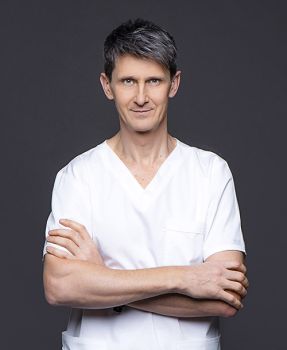
Content author - plastic surgeon Valentyn Zykov
- Practicing surgeon since 1998
- I perform more than 500 operations a year
- Laureate of the 21st national program "Person of the year"
- I operate in Poland (Warsaw) and Greece (Athens)


Breast augmentation reviews


-

Tatyana's review
Hello! It's been six months since my breast augmentation surgery, and I want to say thank you once again 😊 I've gained confidence and a sense of pride in myself. Valentin, your hands are golden 🥇 I recommend everyone who has doubts. Don't even think about thinking – if you want to be fabulous, go to Valentyn. -

Inna's review
Dear esteemed Dr. Valentyn Anatolyevich, I want to express my immense gratitude to you. Today marks exactly three months since the surgery, and my breasts have become my source of pride and joy. They are exquisite and beautiful. With my new breasts, I feel younger and more beautiful. My husband looks at me with greedy eyes 😋. Oh, how delightful that is! Thank you, Valentyn Anatolyevich! Thank you for my transformation, and thank you for all your brilliant work, which we constantly see in the updates on your profile. Your great talent as a plastic surgeon, your amazing sense of beauty, combined with meticulous work, create wonders. Your talented surgeries can be admired like the masterpieces of Michelangelo and Renoir because, in your work, you are both a sculptor and an artist. May God bless you and your family and assist you in everything! Sincerely, Inna Bazanova -

Christina's review
In the photo this is us 3 years after the operation. Thank you! “To be honest, I didn’t worry too much about my breasts, I never had any complexes 👸🏻🤣 and a lack of male attention either. She’s either attractive or not, and it doesn’t depend on the size of her breasts at all, girls with small tits will confirm 💯 But yes, the shape of the breasts, those who gave birth will understand me 😩 So, to those who asked the name of my doctor, as they say: don’t thank me" -

Alyona's review
I am pleased to meet Valentyn Anatolyevich Zykov. You have radically changed my life... it has been filled with the joy of being a woman, enthusiastically choosing lingerie and swimsuits. In fact, it's not just lingerie; my entire wardrobe looks different now. There's more to come. I am immensely happy that life and the universe gave me such a gift of fate. I am not ashamed of it and have no regrets. Everything in life happens for a reason, and this was truly important! Doctor sent from heaven, that feeling when you trust someone 100%. 🙏
FAQ