Write a comment
Breast lipofilling is a plastic surgery procedure for breast augmentation or correction using the patient's own fat tissue.
This is a good method with specific indications. It is suitable for correcting breast defects and asymmetry. However, for breast augmentation, breast implants are preferable because injecting a large amount of fat into a small gland, muscle, or subcutaneous fat tissue is not likely to survive. To ensure survival, there needs to be maximal contact between the injected fat and undamaged tissues.
Is it possible to enlarge breasts with the Patient’s Own Fat?
The advantages of breast lipofilling include the absence of scars, no risk of allergic reactions or rejection due to the complete compatibility of the transferred fat with the surrounding tissues, the ability to remove excess fat from problem areas of the body, and a relatively easy recovery process.
The downside of this procedure can be the challenge of obtaining sufficient fat for patients with normal or low body weight. For minimal results, around 200 ml of fat tissue needs to survive in each breast, given that, on average, 50% of the injected fat usually survives. Therefore, it may be challenging for slender individuals or those with average body weight to obtain the necessary 400 ml of pure fat without a solution.
On average, about 50% of the injected fat tissue survives, while the remaining half is absorbed by the body within the first 6 months.
Indications
- Asymmetry of the breasts.
- Presence of indentations, hollows, or irregularities on the breasts.
- Supplement to breast lift surgery.
- Supplement to breast reconstruction with implants after mastectomy.
Before & After Photos

Photo: Breast lift without implants in combination with lipofilling (fat injected into the push-up area)
How is the operation performed?
The breast lipofilling procedure is carried out step by step:
Step 1: Fat collection (liposuction)
Fat is collected using an aspiration cannula through micro-punctures in areas with excess adipose tissue (typically the abdomen, lower back, hips, and back). For fat collection, I employ the most advanced technique - tumescent liposuction using PAL vibratory cannulas, which allows for the maximal preservation of adipocytes (fat cells).
Step 2: Fat injection (lipofilling)
The fatty tissue is mixed and introduced into the areas of the breast that require correction with a thin cannula in micro-portions. Injections are made at different angles and in various directions to increase the contact area between transplanted cells and recipient tissues.
Duration of the operation: 30-60 minutes
Anesthesia: General (inhalation with Sevoflurane or intravenous with Propofol)
Contraindications
Contraindications for breast lipofilling include:
- Age under 18 years
- Pregnancy and lactation
- Cardiovascular diseases
- Coagulation disorders
- Oncological diseases
- Acute inflammatory processes
- Any chronic diseases in the acute stage
- Skin diseases of bacterial, viral, or fungal origin
- Seasonal illnesses (colds, flu, respiratory infections)
- Insufficient fat tissue reserves.
Rehabilitation
Recovery after breast lipofilling is relatively short and straightforward:
-
Hospital stay: 1 day
-
Recovery period: up to 7 days
-
Pain: moderate, discomfort at injection sites
-
Swelling: the main swelling subsides within 1-2 weeks
-
Bruising: usually disappears within a week
-
Complete fat graft integration: up to 6 months
-
Return to work: possible after 1 day
-
Air travel: possible after 3 days
-
Physical activities and sports: avoid for the first 2-3 weeks
-
Follow-up appointments: scheduled at 1 month, 6 months, and 1 year
-
Evaluation of results: typically done after 6 months
Recommendations: During the first month of the recovery period, it is not recommended to massage, stretch, or traumatize the operated area; consume alcohol or nicotine; expose yourself to high temperatures (such as compresses, saunas, baths, tanning beds, sunlight, etc.); swim in pools or natural bodies of water to prevent the risk of infection.
The introduced fat prefers rest during the first few months.
Possible complications and risks
Complications typically arise due to the patient not following the doctor's recommendations and may include:
- Infection of the surgical site due to a lack of personal hygiene
- Bleeding as a result of overexertion and trauma
- Skin pigmentation due to exposure to sunlight without adequate sun protection, as well as exposure to tanning beds, etc.
- Inflammation caused by overheating of the surgical areas (hot baths, saunas, etc.)
- Inflammation due to alcohol and/or drug (psychotropic) use, smoking, vigorous massage, and stretching of the surgical site, etc.
Sometimes, due to individual patient characteristics, the following complications may occur:
- Thrombosis, heart and lung complications, infectious exacerbations
- Seroma (aseptic inflammation resulting in the accumulation of serous fluid)
- Keloid scars (excessive growth of tough connective tissue at the puncture site)
- Necrosis, nerve palsy in the area of the surgical intervention in cases of atypical vessel, vein, artery, and nerve positioning
Can fat grafting to the breasts increase the risk of breast cancer?
According to research from the US National Center for Biotechnology Information (NCBI): "Fat grafting in breast surgery is a powerful tool for correcting asymmetries, and is also known to be a safe procedure. Patients who undergo breast augmentation with a fat graft for aesthetic purposes are not at an elevated risk for future breast cancer development."
Schedule a consultation at +38 (098) 364-65-09 (Ph/Viber/WApp/Telegram)
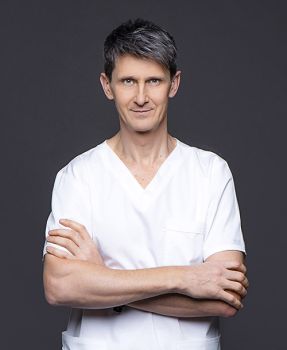
Content author - plastic surgeon Valentyn Zykov
- Practicing surgeon since 1998
- I perform more than 500 operations a year
- Laureate of the 21st national program "Person of the year"
- I operate in Poland (Warsaw) and Greece (Athens)